
Ibn Arabi
Andalusi Muslim polymath and leading proponent of the Zahiri school.

Orientalist · CC BY-SA 3.0
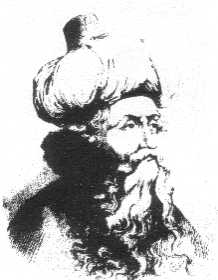
Ibn Ḥazm (November 994 – 15 August 1064) was an Andalusi Muslim polymath, historian, traditionist, jurist, philosopher, and theologian, born in the Córdoban Caliphate, present-day Spain. Described as one of the strictest hadith interpreters, he was a leading proponent and codifier of the Zahiri school of Islamic jurisprudence, and produced a reported 400 works, of which 40 still survive. In all, his written works amounted to some 80,000 pages. Also described as one of the fathers of comparative religion, the Encyclopaedia of Islam refers to him as having been one of the leading thinkers of the Muslim world.
- born
- November 994
- died
- 15 August 1064
- field
- Jurisprudence, theology, philosophy, comparative religion, history, poetry
- nationality
- Andalusi Muslim
- known_for
- Leading proponent and codifier of the Zahiri school of Islamic jurisprudence
Lore & Background
Ibn Ḥazm was born in Cordoba, in the eastern part, in the suburb of Munyat al-Mughīra, before sunrise on the last day of Ramadan 384 AH (7 November 994). He was brought up in the almunia of al-Mughīra on the outskirts of al-Zāhira, where his father, Abū ʿUmar Aḥmad, a prominent vizier of al-Manṣūr and his son al-Muẓaffar, had settled. His early education was exclusively from women, from whom he learnt the Qurʾān, reading, and poetry. In his youth, before the civil war, he fell deeply in love with a sixteen-year-old maidservant of his household. This period of stability ended with the outbreak of civil war in 1008–1009: his father was dismissed from office, briefly imprisoned, and stripped of his wealth. Two days after the coup, his family fled to the western part of Cordoba in February 1009. His brother Abū Bakr died in a plague in 1010–1011, and his father died shortly after, in 1012. In 1013, Berber forces sacked Cordoba, and the eighteen-year-old Ibn Ḥazm fled for Almería. While in the region, around 1013–1014, he visited Málaga and engaged in scriptural debates with the Jewish scholar Ismāʿīl ibn al-Naghrīla (Samuel ha-Nagid). In 1016, the ruler of Almería, Khayrān, exiled him for plotting for the Umayyads. He took refuge in the fortress of Ḥiṣn al-Qaṣr, then sailed to Valencia in 1018 to join the army of the Umayyad pretender al-Murtaḍā. The campaign ended in defeat, and Ibn Ḥazm was imprisoned by Berber forces. Following his release, he secretly entered Córdoba in 1019, then moved to Játiva, where between 1022 and 1027 he composed Ṭawq al-Ḥamāmah (The Ring of the Dove). In December 1023, Caliph ʿAbd al-Raḥmān al-Mustaẓhir appointed him as vizier alongside his literary friend Ibn Shuhayd and his cousin Abū l-Mughīra. The caliphate lasted only a month and a half, and Ibn Ḥazm was returned to prison. He never traveled to the East for pilgrimage or study.
Reader's Guide
Ibn Ḥazm's significance lies in his role as a leading proponent and codifier of the Zahiri school of Islamic jurisprudence, which relied on a strict, literal interpretation of the Qur'an and hadith. He produced a reported 400 works, of which 40 still survive, amounting to some 80,000 pages. His writings include the Ṭawq al-Ḥamāmah (The Ring of the Dove), a treatise on love composed between 1022 and 1027. He is also described as one of the fathers of comparative religion. The Encyclopaedia of Islam refers to him as having been one of the leading thinkers of the Muslim world. His legacy endures through his writings, such as Futūḥāt al-Makkiyya, and through his students, including Sadr al-Din al-Qunawi and Baybars. Ibn 'Arabī is also regarded as a wali (saint) by some scholars and Muslim communities, cementing his lasting influence on Islamic spirituality.
Did You Know?
- Ibn Ḥazm was born in Cordoba in the suburb of Munyat al-Mughīra on 7 November 994, with Scorpio in the ascendant.
- He produced a reported 400 works, of which 40 still survive, amounting to some 80,000 pages.
- He never traveled to the East for pilgrimage or study, possibly due to political turmoil and his father's death.
- He composed Ṭawq al-Ḥamāmah (The Ring of the Dove) between 1022 and 1027 while living in Játiva.
- He was appointed vizier in December 1023 under Caliph ʿAbd al-Raḥmān al-Mustaẓhir, but the caliphate lasted only a month and a half.
Scholarly Prolificacy and Intellectual Scope
Ibn Hazm stands as one of the most extraordinarily productive minds in the Islamic intellectual tradition. His reported output spans roughly four hundred distinct works, of which approximately forty remain extant today. The sheer volume of his surviving and lost writings is staggering: his complete corpus is estimated at around eighty thousand pages, a testament to a lifetime of relentless scholarship. His intellectual range was vast, encompassing jurisprudence, theology, philosophy, history, and the study of religious traditions beyond Islam. He is widely regarded as one of the strictest interpreters of hadith literature and served as the principal codifier and advocate of the Zahiri school of Islamic law, which emphasized the literal text of scripture over speculative reasoning. Beyond jurisprudence, he is credited as a pioneering figure in comparative religion, systematically examining the doctrines of other faiths alongside his own. The Encyclopaedia of Islam recognizes him as one of the foremost thinkers of the entire Muslim world, a designation that reflects both the breadth and depth of his contributions across multiple disciplines of knowledge.
The Contested Lineage of the Banū Ḥazm
The question of Ibn Hazm's ancestry remains one of the most debated issues in medieval Iberian historiography. Two genealogies survive, both tracing the family to a Persian ancestor named Yazīd al-Fārisī, a client connected to the Umayyad dynasty. The Banū Ḥazm family themselves, along with Ibn Hazm's students and sons, consistently affirmed this Persian origin. However, the contemporary historian Ibn Ḥayyān challenged this narrative, arguing that the family were actually recent converts from the small town of Labla, with no notable nobility among their forebears. Most modern Western scholars, including Reinhart Dozy, Emilio García Gómez, and David Wasserstein, side with the Iberian-origin theory. Wasserstein specifically argued the Persian genealogy is mathematically improbable, while Maribel Fierro suggested the claim was strategically fabricated to signal prior Umayyad clientage rather than genuine Persian descent. Conversely, scholars of Muslim background such as Muhammad Abu Zahra and Abdelilah Ljamai tend to accept the family's own account, reasoning that a man of Ibn Hazm's stature would not fabricate such a claim.
A Childhood in the Shadow of Power
Ibn Hazm was born in the eastern quarter of Córdoba, in the suburb of Munyat al-Mughīra, at the close of a Ramadan night in November 994. His father, Abū ʿUmar Aḥmad, held the prestigious position of vizier under the Amirid rulers al-Manṣūr and al-Muẓaffar, placing the family at the apex of Andalusi political life. Young Ibn Hazm grew up in the almunia of al-Mughīra on the city's outskirts, where his early education was conducted entirely by the women of the household. From them he learned the Qur'an, basic literacy, and poetry, though he later regarded this period as a lost time for serious intellectual development. His youth was marked by intense personal experience: he fell deeply in love with a sixteen-year-old maidservant in his own household, an episode he would later immortalize in Ṭawq al-Ḥamāmah. He also composed poetry at the request of Ḍanā al-ʿĀmiriyya, a woman connected to the ruling family. This world of privilege shattered abruptly in 1008–1009, when civil war toppled the Amirid regime. His father was dismissed, briefly imprisoned by the Slav general Wāḍiḥ, and stripped of his fortune. Within two days of the coup, the family fled to the western part of Córdoba, an upheaval that would reshape the young man's entire trajectory.
The Inner Landscape: Pride, Loyalty, and Emotional Restraint
Ibn Hazm left behind a remarkably candid self-portrait, revealing a man of sharply contradictory temperaments. He described himself as possessing an unwavering, almost fierce loyalty to those with whom he had formed close bonds, coupled with a proud, noble sensitivity that made him unable to tolerate injustice. Yet he also claimed a peculiar emotional detachment: he stated that he was incapable of shedding tears, a trait he attributed to a childhood habit of consuming frankincense to treat episodes of heart palpitations. The scholar Emilio García Gómez drew an intriguing inference from the body of Ibn Hazm's writings, suggesting that his upbringing surrounded by the women of the harem granted him an unusually penetrating understanding of feminine psychology and emotional life. This intimate knowledge of the domestic sphere, combined with his self-described pride and loyalty, created a complex inner world that found expression in both his legal scholarship and his lyrical poetry. The tension between his intellectual rigor and his emotional depth—between the strict Zahirite jurist and the poet of longing—remains one of the most compelling dimensions of his legacy.
Gallery
Frequently Asked Questions
Who is Ibn Arabi?
Ibn 'Arabī (1165–1240) was an Arab Sufi mystic, poet, philosopher, and Sunni scholar who lived in al-Andalus, the Muslim-ruled part of medieval Iberia. He is best remembered as a towering figure in Sufi metaphysics whose writings reshaped how later generations understood the relationship between the divine and the created world.
What is wahdat al-wujūd and why is Ibn Arabi linked to it?
Wahdat al-wujūd, usually rendered as 'unity of existence,' is a monist doctrine asserting that all of reality is a single, indivisible manifestation of one Being. Ibn Arabi is credited with being the first to set out this framework in an explicit, systematic way, and his formulation became a cornerstone of later Sufi and philosophical discourse.
When and where was Ibn Arabi born, and when did he die?
He was born in the summer of 1165 in al-Andalus and died in November 1240. His roughly 75-year life therefore bridges the late twelfth and early thirteenth centuries.
What fields did Ibn Arabi work in?
His surviving corpus spans Sufi metaphysics, Islamic philosophy, and poetry, showing that he moved fluidly across mystical, intellectual, and literary registers. Rather than confining himself to one discipline, he wove all three together in a single body of work.
Why is Ibn Arabi considered so important in Islamic intellectual history?
By giving the unity-of-existence doctrine a clear philosophical architecture, he provided Sufi thought with a rigorous vocabulary that scholars and mystics have debated ever since. His work also exemplifies the vibrant exchange of ideas between the Iberian and wider Islamic worlds during the medieval period.
More in Islamic Scholars & Sages 1-21
Spotted an error? Know more?
This is a living reference — every entry is fact-audited, and reader corrections feed straight into our audit queue. Suggest an edit · See this site's audit record