
Ibn Hazm
Andalusi polymath, Zahiri jurist, and leading thinker of the Muslim world.

ShafiNotes · CC0
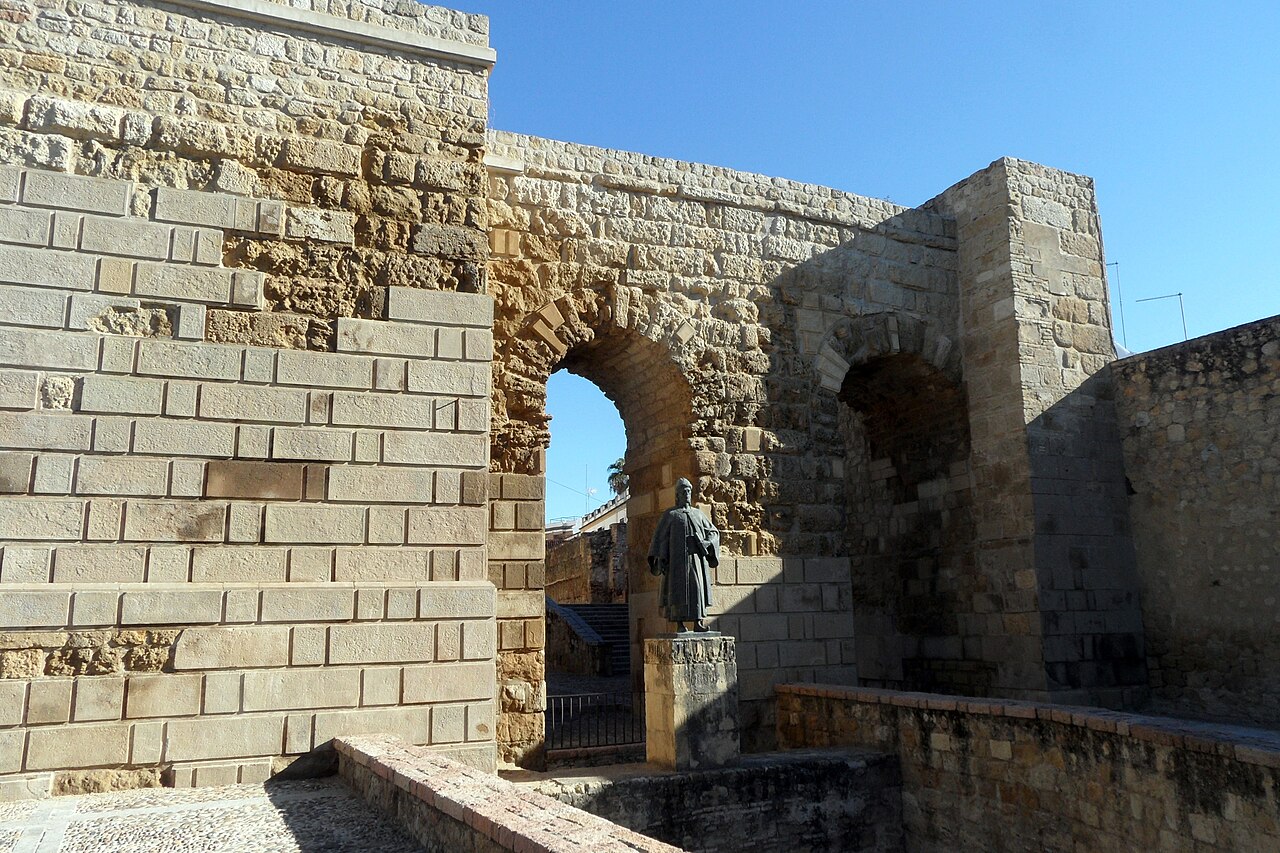
Ibn Ḥazm (November 994 – 15 August 1064) was an Andalusi Muslim polymath, historian, traditionist, jurist, philosopher, and theologian, born in the Córdoban Caliphate, present-day Spain. He was a leading proponent and codifier of the Zahiri school of Islamic jurisprudence, described as one of the strictest hadith interpreters, and produced a reported 400 works, of which 40 still survive. His written works amounted to some 80,000 pages, and the Encyclopaedia of Islam refers to him as one of the leading thinkers of the Muslim world.
- born
- November 994, Cordoba, Córdoban Caliphate
- died
- 15 August 1064
- field
- Polymath (historian, traditionist, jurist, philosopher, theologian)
- nationality
- Andalusi
- known_for
- Leading proponent and codifier of the Zahiri school of Islamic jurisprudence; de
Lore & Background
Ibn Ḥazm was born into a wealthy Cordoban family; his father, Abū ʿUmar Aḥmad, was a prominent vizier of al-Manṣūr and his son and successor, al-Muẓaffar. He was raised in the almunia of al-Mughīra on the outskirts of al-Zāhira, receiving his early education exclusively from women, learning the Qurʾān, reading, and poetry. The outbreak of civil war (fitna) in 1008–1009 ended this stability: his father was dismissed from office, briefly imprisoned by the Slav general Wāḍiḥ, and stripped of his wealth. Ibn Ḥazm records that two days after the coup, his family fled to the western part of Cordoba, an episode he dates to Jumādā II 399 AH (February 1009 CE). His brother Abū Bakr died in a plague in 1010–1011, and his father died shortly after, in 1012. In 1013, Berber forces led by the Umayyad claimant Sulaymān al-Mustaʿīn sacked Cordoba, leaving the family home in Balāṭ Mughīth in ruins. The eighteen-year-old Ibn Ḥazm fled for Almería with his close friend Abū Bakr Muḥammad b. Isḥāq b. Muḥallab. While in the region, around 1013–1014, he visited Málaga, where he engaged in scriptural debates with the prominent Jewish scholar Ismāʿīl ibn al-Naghrīla (Samuel ha-Nagid). In 1016, the ruler of Almería, Khayrān, accused Ibn Ḥazm of plotting for the Umayyads and exiled him. He and his friend took refuge for several months in the fortress of Ḥiṣn al-Qaṣr. On hearing of a new Umayyad pretender, al-Murtaḍā, the pair sailed to Valencia to join his army in 1018. The campaign ended in a crushing defeat against the Zirids of Granada, and Ibn Ḥazm was imprisoned by Berber forces. Following his release, he secretly entered Córdoba in 1019, lodging with an aloof former slave girl belonging to his family. He then moved to Játiva, where sometime between 1022 and 1027 he composed Ṭawq al-Ḥamāmah (The Ring of the Dove).
Reader's Guide
Ibn Ḥazm's significance lies in his role as a leading codifier of the Zahiri school of Islamic jurisprudence, which emphasized strict adherence to the literal meaning of scripture. His vast output—a reported 400 works, 40 surviving, totaling some 80,000 pages—marks him as one of the most prolific scholars of his era. He is also described as one of the fathers of comparative religion, reflecting his engagement in scriptural debates, such as with the Jewish scholar Ismāʿīl ibn al-Naghrīla (Samuel ha-Nagid). His political career was paradoxical: his family had faithfully served the ʿAmirid dictators, yet he himself became a vocal partisan of the Umayyad caliphal pretenders. In December 1023, Caliph ʿAbd al-Raḥmān al-Mustaẓhir appointed Ibn Ḥazm as vizier alongside his literary friend Ibn Shuhayd and his cousin Abū l-Mughīra; the caliphate lasted only a month and a half, and Ibn Ḥazm was returned to prison. The question of his origins remains disputed: his family claimed Persian origin, and his disciple al-Ḥumaydī affirmed this, but the contemporary historian Ibn Ḥayyān denounced this genealogy, claiming the Banū Ḥazm were recent converts native to al-Andalus. Most modern Western scholars also deny this lineage, with David J. Wasserstein arguing a local Iberian Christian background is the more reasonable assumption. His work Ṭawq al-Ḥamāmah offers insights into his personal life and views on love, including his record of falling deeply in love as a young man with a sixteen-year-old maidservant of his household.
Did You Know?
- Ibn Ḥazm never traveled to the East for pilgrimage or study, possibly due to political turmoil and his father's death disrupting the family's resources.
- He described himself as possessing two conflicting dispositions: unwavering loyalty to familiar companions, and a fierce, noble pride that could not stomach injustice.
- He wrote that he was unable to shed tears, which he attributed to a childhood habit of consuming frankincense to treat heart palpitations.
- His written works amounted to some 80,000 pages, of which only 40 of a reported 400 works survive.
- The scholar Emilio García Gómez infers from his writings that his upbringing among women gave him an unusually deep understanding of feminine psychology.
A Polymath's Towering Output
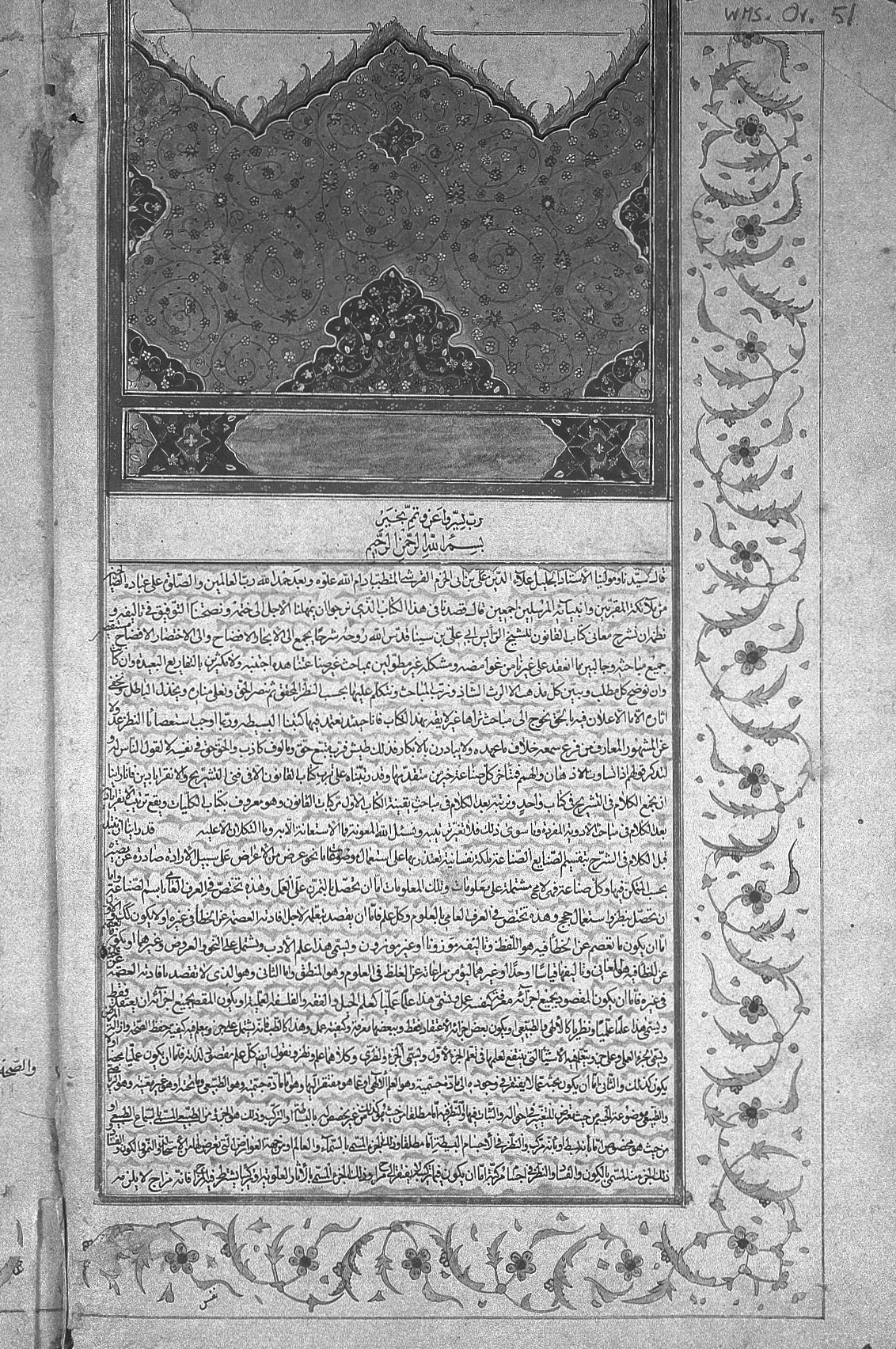
Ibn Hazm's intellectual production remains staggering by any historical standard. Working across law, theology, philosophy, history, and religious comparison, he generated a corpus that biographers estimate at four hundred distinct works, spanning roughly eighty thousand pages of manuscript. Of that vast body, approximately forty texts have survived to the present day. Within Islamic jurisprudence, he is remembered as the foremost systematizer of the Zahiri school, a tradition that insists on the plain, literal meaning of scriptural texts and rejects speculative reasoning in legal derivation. His approach to hadith was marked by an exceptionally rigorous standard of authentication, earning him the description of one of the strictest interpreters in the entire tradition. Beyond the strictly Islamic sciences, his engagement with other faiths and his comparative method led later scholars to name him a pioneering figure in comparative religion. The Encyclopaedia of Islam, the standard reference for Islamic studies, places him among the leading thinkers of the broader Muslim intellectual world, a testament to the breadth and depth of a single mind operating in eleventh-century al-Andalus.
The Persian Lineage Question
The question of where the Banū Ḥazm truly came from has generated centuries of scholarly dispute. The family's own tradition, reinforced by Ibn Hazm's sons, his disciple al-Ḥumaydī, and later figures such as Ibn Khallikān and al-Nuwayrī, traces their ancestry to a Persian mawla named Yazīd al-Fārisī, a client of the Umayyad house, with an ancestor called Khalaf credited as the first to cross into al-Andalus. Yet the contemporary historian Ibn Ḥayyān flatly rejected this pedigree in his al-Matīn, insisting the family were recent converts from the obscure settlement of Labla, with no claim to nobility whatsoever. Modern Western scholars have largely sided with the skeptical reading: Wasserstein called the Persian chain mathematically improbable, while Fierro suggested the lineage was a social signal of Umayyad clientage rather than genuine descent. Scholars of Muslim background, including Abu Zahra and Ljamai, tend to accept the family's own account. The geographic anchor, however, is less contested: early sources consistently place the Banū Ḥazm in the Huelva region, specifically a rural estate called Munt Līsham, before the family moved to Cordoba roughly two generations before Ibn Hazm's birth.
Youth in the Shadow of a Caliphate
Ibn Hazm entered the world in the eastern suburb of Munyat al-Mughīra on the last night of Ramadan in 994 CE, the son of Abū ʿUmar Aḥmad, a high-ranking vizier serving both al-Manṣūr and his successor al-Muẓaffar. His childhood unfolded in the almunia his father had acquired on the outskirts of the city, a household of wealth where the women of the harem served as his first and only teachers of the Qurʾan, literacy, and poetry. He later regarded those formative years as a period of intellectual idleness, yet the intimacy of that environment left a lasting imprint: the scholar García Gómez argued it cultivated in him an unusually penetrating grasp of feminine psychology. By his own testimony, he possessed a dual temperament—deep loyalty to those he loved paired with a proud, almost violent intolerance of injustice—and he attributed his inability to weep to a childhood remedy of chewing frankincense for heart palpitations. That world of privilege shattered in 1008–1009, when the Amirid regime collapsed in civil war. His father was dismissed, briefly imprisoned by the Slav general Wāḍiḥ, and stripped of his fortune; within two days of the coup, the family fled to the western quarter of Cordoba.
Love, Poetry, and the Ring of the Dove
Before the political upheaval destroyed his family's standing, the young Ibn Hazm experienced a love affair that would shape his most famous literary work. In Ṭawq al-Ḥamāmah, commonly rendered as The Ring of the Dove, he recorded his deep attachment to a sixteen-year-old maidservant in his household, a relationship he described with unflinching emotional honesty. The same period saw him composing poetry on the theme of forgetfulness at the request of Ḍanā al-ʿĀmiriyya, a daughter or wife of the amir al-Muẓaffar, placing his early verse within the orbit of the ruling court. His self-portrait in these writings reveals a man torn between two powerful dispositions: an unwavering devotion to familiar companions and a fierce, noble pride that could not endure injustice. He also noted a peculiar physical trait—his inability to shed tears—which he traced to a childhood habit of consuming frankincense to ease heart palpitations. These personal reflections, woven into a text that would become one of the most celebrated works of Arabic love literature, give readers an intimate window into the mind behind the polymath, the jurist, and the theologian.
Gallery



Frequently Asked Questions
Who is Ibn Hazm?
Ibn Hazm was a remarkably versatile Andalusi scholar from medieval Spain who worked across law, history, philosophy, and theology. He is widely regarded as one of the most influential intellectual figures in the broader Muslim world.
What school of Islamic law is Ibn Hazm associated with?
He is best remembered as the foremost champion and systematizer of the Zahiri (literalist) approach to jurisprudence. Within that tradition, he was noted for his exceptionally rigorous stance on interpreting hadith.
How prolific was Ibn Hazm as a writer?
Estimates credit him with roughly four hundred separate works, though only about forty are known to survive today. The surviving corpus still spans an estimated eighty thousand pages of text.
When and where was Ibn Hazm born, and when did he die?
He entered the world in November 994 in Córdoba, then part of the Córdoban Caliphate in what is now Spain. He passed away on 15 August 1064, living to the age of roughly sixty-nine.
Why is Ibn Hazm considered important in Islamic intellectual history?
Beyond his legal scholarship, he is often cited as one of the early fathers of comparative religion for his systematic study of religious traditions. His breadth across multiple disciplines made him a defining polymath of the Andalusi period.
More in Islamic Scholars & Sages 1-21
Spotted an error? Know more?
This is a living reference — every entry is fact-audited, and reader corrections feed straight into our audit queue. Suggest an edit · See this site's audit record